Requirement Validation and Traceability Explained
The Essential Guide to Requirements Management and Traceability

Requirement Validation and Traceability Explained
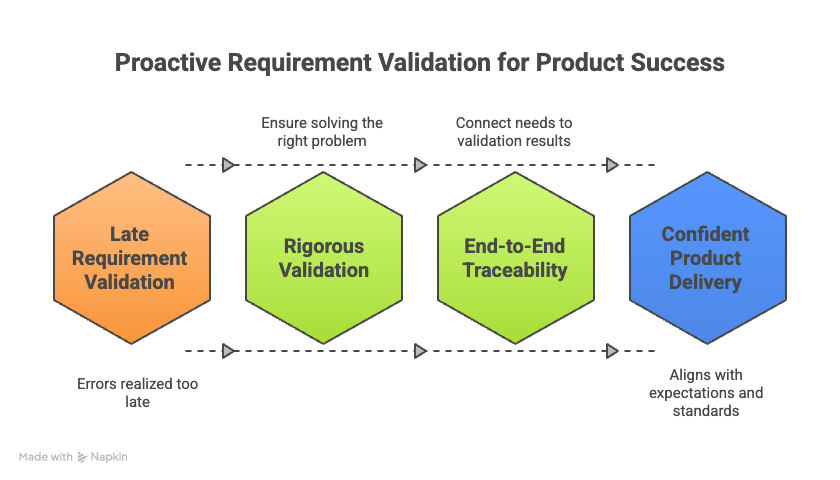
Requirement validation is frequently a stumbling block in complex product development. Teams often overlook this step or perform it far too late in the lifecycle, only realizing errors when a product fails to meet user needs or regulatory standards. While verification confirms technical accuracy, validation ensures you are solving the right problem. By combining rigorous validation with end-to-end traceability, organizations can confidently deliver systems that align with customer expectations and strict regulatory frameworks. This proactive approach transforms compliance from a chaotic burden into a competitive advantage.
What is requirement validation and traceability?
Requirement validation and traceability function as the verification mechanism for product success. While verification asks, “Did we build the product correctly based on specs?” validation asks, “Did we build the right product for the user?” Traceability connects these distinct phases, creating a clear line of sight from the initial stakeholder need to the final validation result.
Requirement validation and traceability ensure that each requirement is not only implemented correctly but also fulfills its intended business or regulatory need. Validation confirms that the product meets the user’s actual environment and usage needs, while traceability links specific requirements to test cases and results. Together, they provide clear proof that every requirement has been satisfied, reducing risk and supporting compliance. This continuous connection allows teams to detect disconnects between what was requested and what was built before they become expensive errors.
Ready to Find Out More?
Our team of experts is here to answer any questions and learn how we can help enable your continued success. Get started with a free 30-day trial, or book a demo!
Why validation matters for compliance and quality
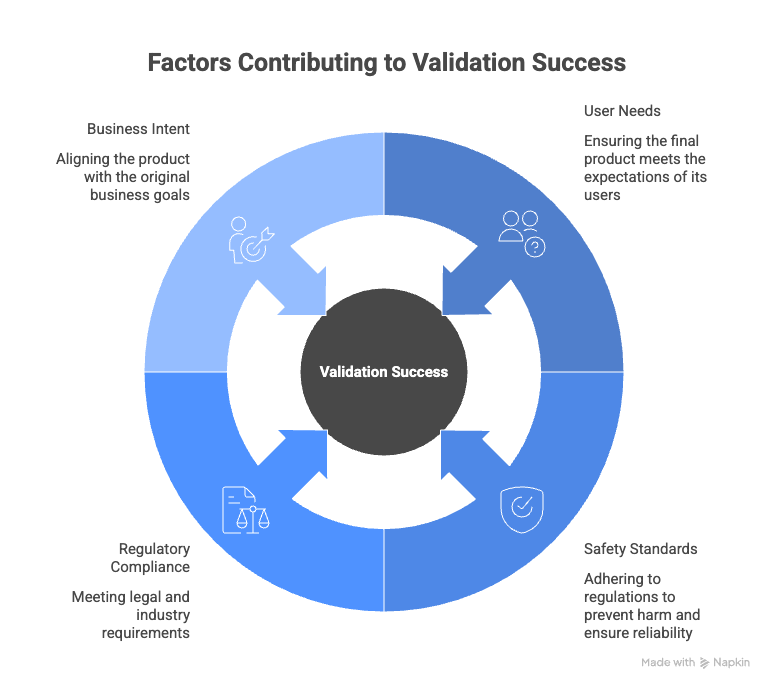
Validation is not just a technical checkpoint; it is a critical safeguard for quality and compliance. It ensures that the final output aligns with the original business intent rather than just the technical implementation. In highly regulated sectors, missing this step allows gaps where safety hazards or costly recalls can occur.
Validation proves critical across several key industries:
- Medical Devices: Validation demonstrates that a device meets user needs and safety standards (like FDA and ISO 13485), directly reducing patient risk.
- Aerospace and Defense: It ensures systems meet safety-critical regulations such as DO-178C, preventing catastrophic failures in complex environments.
- Automotive: Teams rely on validation to meet ISO 26262 standards for functional safety, ensuring reliable performance in autonomous and assisted driving systems.
By prioritizing validation, these industries protect their liability and ensure that every delivered requirement serves a verified purpose.
How Live Traceability™ supports validation success
Validation is most effective when requirements are continuously tracked against test results. Live Traceability™ supports validation success by automating the links between requirements, test cases, and validation results. Instead of relying on static spreadsheets or documents that quickly become outdated, Live Traceability creates a dynamic, living data model.
This approach provides real-time evidence of compliance. If a test fails or a requirement changes, the system flags the impact immediately across the entire development chain. Teams can instantly generate audit-ready reports that demonstrate every requirement has been validated. This automation reduces the risk of human oversight and ensures that no requirement is validated in isolation. Product, engineering, and QA teams share a single source of truth, enabling them to catch issues early and maintain a state of constant audit readiness.
By integrating requirement validation with Live Traceability, teams move from reactive firefighting to proactive quality management. This ensures products are safe, compliant, and market-ready. Next, we will explore the software that makes this possible in Chapter 5: Requirements Management Tools.
In This Webinar, We Discuss Jama Connect® vs IBM® DOORS® for Requirements-Driven Testing
Book a Demo
See Jama Connect in Action!
Our Jama Connect experts are ready to guide you through a personalized demo, answer your questions, and show you how Jama Connect can help you identify risks, improve cross-team collaboration, and drive faster time to market.