Requirements Gathering Techniques for Agile Product Teams
The Essential Guide to Requirements Management and Traceability
Chapters
- 1. Requirements Management
- Overview
- 1 What is Requirements Management?
- 2 Why do you need Requirements Management?
- 3 Four Stages of Requirements Management Processes
- 4 Adopting an Agile Approach to Requirements Management
- 5 Status Request Changes
- 6 Conquering the 5 Biggest Challenges of Requirements Management
- 7 Three Reasons You Need a Requirements Management Solution
- 8 Guide to Poor Requirements: Identify Causes, Repercussions, and How to Fix Them
- 2. Writing Requirements
- Overview
- 1 Functional requirements examples and templates
- 2 Identifying and Measuring Requirements Quality
- 3 How to write system requirement specification (SRS) documents
- 4 The Fundamentals of Business Requirements: Examples of Business Requirements and the Importance of Excellence
- 5 Adopting the EARS Notation to Improve Requirements Engineering
- 6 Jama Connect Advisor™
- 7 Frequently Asked Questions about the EARS Notation and Jama Connect Advisor™
- 8 How to Write an Effective Product Requirements Document (PRD)
- 9 Functional vs. Non-Functional Requirements
- 10 What Are Nonfunctional Requirements and How Do They Impact Product Development?
- 11 Characteristics of Effective Software Requirements and Software Requirements Specifications (SRS)
- 12 8 Do’s and Don’ts for Writing Requirements
- 3. Requirements Gathering and Management Processes
- Overview
- 1 Requirements Engineering
- 2 Requirements Analysis
- 3 A Guide to Requirements Elicitation for Product Teams
- 4 Requirements Gathering Techniques for Agile Product Teams
- 5 What is Requirements Gathering?
- 6 Defining and Implementing a Requirements Baseline
- 7 Managing Project Scope — Why It Matters and Best Practices
- 8 How Long Do Requirements Take?
- 9 How to Reuse Requirements Across Multiple Products
- 4. Requirements Traceability
- Overview
- 1 How is Traceability Achieved? A Practical Guide for Engineers
- 2 What is Requirements Traceability? Importance Explained
- 3 Tracing Your Way to Success: The Crucial Role of Traceability in Modern Product and Systems Development
- 4 Change Impact Analysis (CIA): A Short Guide for Effective Implementation
- 5 What is Requirements Traceability and Why Does It Matter for Product Teams?
- 6 What is Meant by Version Control?
- 7 Key Traceability Challenges and Tips for Ensuring Accountability and Efficiency
- 8 Unraveling the Digital Thread: Enhancing Connectivity and Efficiency
- 9 The Role of a Data Thread in Product and Software Development
- 10 How to Create and Use a Requirements Traceability Matrix
- 11 Traceability Matrix 101: Why It’s Not the Ultimate Solution for Managing Requirements
- 12 Live Traceability vs. After-the-Fact Traceability
- 13 Overcoming Barriers to Live Requirements Traceability™
- 14 Requirements Traceability, What Are You Missing?
- 15 Four Best Practices for Requirements Traceability
- 16 Requirements Traceability: Links in the Chain
- 17 What Are the Benefits of End-to-End Traceability During Product Development?
- 18 FAQs About Requirements Traceability
- 5. Requirements Management Tools and Software
- Overview
- 1 Selecting the Right Requirements Management Tools and Software
- 2 Why Investing in Requirements Management Software Makes Business Sense During an Economic Downturn
- 3 Why Word and Excel Alone is Not Enough for Product, Software, and Systems Development
- 4 Application lifecycle management (ALM)
- 5 Is There Life After DOORS®?
- 6 Can You Track Requirements in Jira?
- 7 Checklist: Selecting a Requirements Management Tool
- 6. Requirements Validation and Verification
- 7. Meeting Regulatory Compliance and Industry Standards
- Overview
- 1 Understanding ISO Standards
- 2 Understanding ISO/IEC 27001: A Guide to Information Security Management
- 3 What is DevSecOps? A Guide to Building Secure Software
- 4 Compliance Management
- 5 What is FMEA? Failure Modes and Effects Analysis
- 6 TÜV SÜD: Ensuring Safety, Quality, and Sustainability Worldwide
- 8. Systems Engineering
- Overview
- 1 What is Systems Engineering?
- 2 How Do Engineers Collaborate? A Guide to Streamlined Teamwork and Innovation
- 3 The Systems Engineering Body of Knowledge (SEBoK)
- 4 What is MBSE? Model-Based Systems Engineering Explained
- 5 Digital Engineering Between Government and Contractors
- 6 Digital Engineering Tools: The Key to Driving Innovation and Efficiency in Complex Systems
- 9. Automotive Development
- 10. Medical Device & Life Sciences Development
- Overview
- 1 The Importance of Benefit-Risk Analysis in Medical Device Development
- 2 Software as a Medical Device: Revolutionizing Healthcare
- 3 What’s a Design History File, and How Are DHFs Used by Product Teams?
- 4 Navigating the Risks of Software of Unknown Pedigree (SOUP) in the Medical Device & Life Sciences Industry
- 5 What is ISO 13485? Your Comprehensive Guide to Compliant Medical Device Manufacturing
- 6 What You Need to Know: ANSI/AAMI SW96:2023 — Medical Device Security
- 7 ISO 13485 vs ISO 9001: Understanding the Differences and Synergies
- 8 Failure Modes, Effects, and Diagnostic Analysis (FMEDA) for Medical Devices: What You Need to Know
- 9 Embracing the Future of Healthcare: Exploring the Internet of Medical Things (IoMT)
- 11. Aerospace & Defense Development
- 12. Architecture, Engineering, and Construction (AEC industry) Development
- 13. Industrial Manufacturing & Machinery, Automation & Robotics, Consumer Electronics, and Energy
- 14. Semiconductor Development
- 15. AI in Product Development
- Glossary
Chapter 3: Requirements Gathering Techniques for Agile Product Teams
Chapters
- 1. Requirements Management
- Overview
- 1 What is Requirements Management?
- 2 Why do you need Requirements Management?
- 3 Four Stages of Requirements Management Processes
- 4 Adopting an Agile Approach to Requirements Management
- 5 Status Request Changes
- 6 Conquering the 5 Biggest Challenges of Requirements Management
- 7 Three Reasons You Need a Requirements Management Solution
- 8 Guide to Poor Requirements: Identify Causes, Repercussions, and How to Fix Them
- 2. Writing Requirements
- Overview
- 1 Functional requirements examples and templates
- 2 Identifying and Measuring Requirements Quality
- 3 How to write system requirement specification (SRS) documents
- 4 The Fundamentals of Business Requirements: Examples of Business Requirements and the Importance of Excellence
- 5 Adopting the EARS Notation to Improve Requirements Engineering
- 6 Jama Connect Advisor™
- 7 Frequently Asked Questions about the EARS Notation and Jama Connect Advisor™
- 8 How to Write an Effective Product Requirements Document (PRD)
- 9 Functional vs. Non-Functional Requirements
- 10 What Are Nonfunctional Requirements and How Do They Impact Product Development?
- 11 Characteristics of Effective Software Requirements and Software Requirements Specifications (SRS)
- 12 8 Do’s and Don’ts for Writing Requirements
- 3. Requirements Gathering and Management Processes
- Overview
- 1 Requirements Engineering
- 2 Requirements Analysis
- 3 A Guide to Requirements Elicitation for Product Teams
- 4 Requirements Gathering Techniques for Agile Product Teams
- 5 What is Requirements Gathering?
- 6 Defining and Implementing a Requirements Baseline
- 7 Managing Project Scope — Why It Matters and Best Practices
- 8 How Long Do Requirements Take?
- 9 How to Reuse Requirements Across Multiple Products
- 4. Requirements Traceability
- Overview
- 1 How is Traceability Achieved? A Practical Guide for Engineers
- 2 What is Requirements Traceability? Importance Explained
- 3 Tracing Your Way to Success: The Crucial Role of Traceability in Modern Product and Systems Development
- 4 Change Impact Analysis (CIA): A Short Guide for Effective Implementation
- 5 What is Requirements Traceability and Why Does It Matter for Product Teams?
- 6 What is Meant by Version Control?
- 7 Key Traceability Challenges and Tips for Ensuring Accountability and Efficiency
- 8 Unraveling the Digital Thread: Enhancing Connectivity and Efficiency
- 9 The Role of a Data Thread in Product and Software Development
- 10 How to Create and Use a Requirements Traceability Matrix
- 11 Traceability Matrix 101: Why It’s Not the Ultimate Solution for Managing Requirements
- 12 Live Traceability vs. After-the-Fact Traceability
- 13 Overcoming Barriers to Live Requirements Traceability™
- 14 Requirements Traceability, What Are You Missing?
- 15 Four Best Practices for Requirements Traceability
- 16 Requirements Traceability: Links in the Chain
- 17 What Are the Benefits of End-to-End Traceability During Product Development?
- 18 FAQs About Requirements Traceability
- 5. Requirements Management Tools and Software
- Overview
- 1 Selecting the Right Requirements Management Tools and Software
- 2 Why Investing in Requirements Management Software Makes Business Sense During an Economic Downturn
- 3 Why Word and Excel Alone is Not Enough for Product, Software, and Systems Development
- 4 Application lifecycle management (ALM)
- 5 Is There Life After DOORS®?
- 6 Can You Track Requirements in Jira?
- 7 Checklist: Selecting a Requirements Management Tool
- 6. Requirements Validation and Verification
- 7. Meeting Regulatory Compliance and Industry Standards
- Overview
- 1 Understanding ISO Standards
- 2 Understanding ISO/IEC 27001: A Guide to Information Security Management
- 3 What is DevSecOps? A Guide to Building Secure Software
- 4 Compliance Management
- 5 What is FMEA? Failure Modes and Effects Analysis
- 6 TÜV SÜD: Ensuring Safety, Quality, and Sustainability Worldwide
- 8. Systems Engineering
- Overview
- 1 What is Systems Engineering?
- 2 How Do Engineers Collaborate? A Guide to Streamlined Teamwork and Innovation
- 3 The Systems Engineering Body of Knowledge (SEBoK)
- 4 What is MBSE? Model-Based Systems Engineering Explained
- 5 Digital Engineering Between Government and Contractors
- 6 Digital Engineering Tools: The Key to Driving Innovation and Efficiency in Complex Systems
- 9. Automotive Development
- 10. Medical Device & Life Sciences Development
- Overview
- 1 The Importance of Benefit-Risk Analysis in Medical Device Development
- 2 Software as a Medical Device: Revolutionizing Healthcare
- 3 What’s a Design History File, and How Are DHFs Used by Product Teams?
- 4 Navigating the Risks of Software of Unknown Pedigree (SOUP) in the Medical Device & Life Sciences Industry
- 5 What is ISO 13485? Your Comprehensive Guide to Compliant Medical Device Manufacturing
- 6 What You Need to Know: ANSI/AAMI SW96:2023 — Medical Device Security
- 7 ISO 13485 vs ISO 9001: Understanding the Differences and Synergies
- 8 Failure Modes, Effects, and Diagnostic Analysis (FMEDA) for Medical Devices: What You Need to Know
- 9 Embracing the Future of Healthcare: Exploring the Internet of Medical Things (IoMT)
- 11. Aerospace & Defense Development
- 12. Architecture, Engineering, and Construction (AEC industry) Development
- 13. Industrial Manufacturing & Machinery, Automation & Robotics, Consumer Electronics, and Energy
- 14. Semiconductor Development
- 15. AI in Product Development
- Glossary
Requirement Gathering Techniques in Agile Development
In traditional waterfall development, teams often treat requirement gathering as a one-time phase at the very beginning of a project. Analysts produce massive requirement documents, get sign-off, and hand them over to developers, hoping nothing changes. Agile flips this script entirely. Instead of static documentation, requirement gathering in agile is an iterative, ongoing conversation. It acknowledges that stakeholders often don’t know exactly what they need until they see what is possible.
Successful agile teams prioritize collaboration over contracts. They understand that requirements are living artifacts that evolve as the market shifts and user feedback rolls in. By breaking large needs into manageable chunks, teams can adapt quickly. While we discussed requirements engineering in [Chapter 3.1], this section dives specifically into how agile methodologies transform the way we define what to build.
Ready to Find Out More?
Our team of experts is here to answer any questions and learn how we can help enable your continued success. Get started with a free 30-day trial, or book a demo!
How is requirement gathering done in Agile?
One of the most common questions teams ask when transitioning from waterfall is: “How is requirement gathering done in Agile if we don’t write everything down upfront?” The answer lies in continuous refinement. In agile requirements gathering, the process is spread throughout the entire project lifecycle rather than front-loaded.
The primary mechanism for this is the User Story. Instead of a technical specification (“The system shall allow input of X”), a user story focuses on value (“As a user, I want X so that I can achieve Y”). These stories are kept in a Product Backlog, which serves as the dynamic repository for all requirements.
Requirement gathering in agile relies heavily on Backlog Grooming (or refinement). During these regular sessions, the product owner and the development team review upcoming items. They clarify details, estimate effort, and split large requirements into smaller, executable pieces. This ensures that when Sprint Planning arrives, the team is pulling from a list of “ready” items that are well-understood. This cycle of constant grooming and planning ensures that the requirements gathering in agile remains flexible, reducing the risk of building features that are no longer relevant by the time they are released.
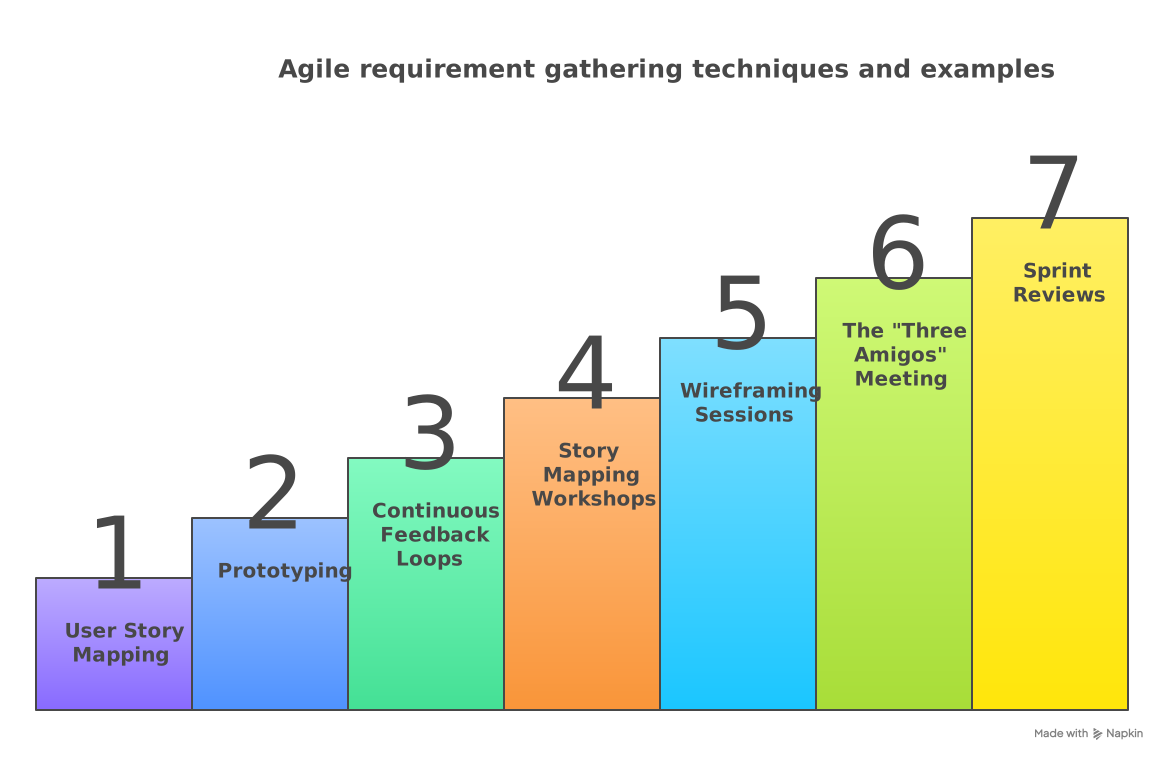
Agile requirement gathering techniques and examples
To effectively capture needs in a fast-moving environment, teams use specific requirement gathering techniques in agile that encourage visualization and rapid validation. These techniques move away from text-heavy documents toward interactive discovery.
User Story Mapping is a powerful technique where teams arrange user stories to visualize the user’s journey through the product. It helps identify gaps in the workflow and prioritizes a Minimum Viable Product (MVP) based on the user’s critical path.
Prototyping is another essential tool. Instead of describing a feature, teams build a low-fidelity mock-up. This allows stakeholders to interact with the concept early, providing immediate feedback that refines the requirement before a single line of production code is written.
Continuous Feedback Loops ensure requirements stay aligned with reality. By demoing working software at the end of every sprint, teams gather real-time reactions that shape the requirements for the next iteration.
Common examples of these techniques in action include:
- Story Mapping Workshops: A team uses sticky notes on a wall to map out the registration process, realizing they missed a “forgot password” flow.
- Wireframing Sessions: A designer sketches a dashboard layout during a meeting to confirm if the data visualization meets the stakeholder’s analytical needs.
- The “Three Amigos” Meeting: A product owner, developer, and tester meet to discuss a specific story, ensuring business, technical, and testing requirements are all aligned before development starts.
- Sprint Reviews: Stakeholders use the latest build and realize a button placement is confusing, leading to a new requirement for UI adjustment in the next sprint.
As agile practices mature, manual gathering techniques can sometimes become a bottleneck. Next, we will explore how AI tools are beginning to automate and enhance these critical discovery processes.
RELATED ARTICLE: Requirements Management Planning: A Guide for Product Teams
In This Webinar, We Discuss Requirements Engineering as a Path to Project Success
AGILE PRODUCT TEAMS refer to the agile product development process. Agile practices include requirements discovery and solutions developed through the collaborative effort of self-organizing and cross-functional teams with their customers/end users).
Book a Demo
See Jama Connect in Action!
Our Jama Connect experts are ready to guide you through a personalized demo, answer your questions, and show you how Jama Connect can help you identify risks, improve cross-team collaboration, and drive faster time to market.